
Let's be honest, writing a resume for freshers feels a bit like being asked to write your autobiography before you've really started living. You've got a degree, maybe an internship, a couple of college projects, and absolutely no idea how to turn that into a document that convinces a stranger to call you for an interview. Sound familiar? You're not the only one. Nearly everyone who has a job right now once sat frozen in front of the same blank template, unsure where to even begin. This guide will walk you through exactly how to build a resume for freshers that doesn't just list what you've done. It makes a recruiter want to know more. By the end, writing a resume for freshers should feel a lot less like guesswork and a lot more like a plan.
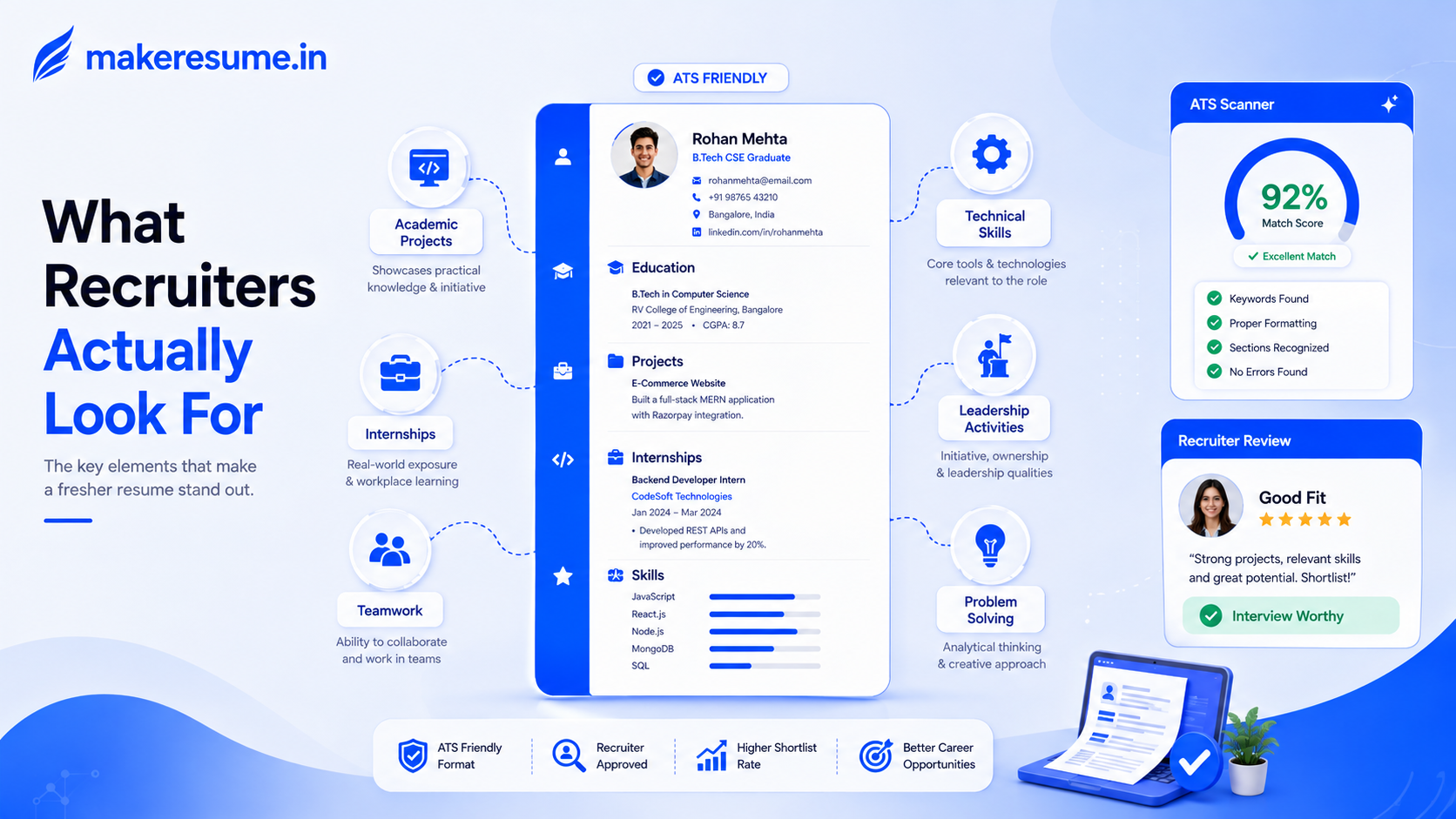
Why a Resume for Freshers Is So Different From Any Other Resume
Here's the thing nobody tells you: this kind of resume isn't a stripped-down version of an experienced professional's resume. It's a completely different animal, built on different strengths.
An experienced candidate leads with job titles and years of impact. You don't have that, and that's fine, because recruiters hiring freshers aren't expecting it. They're not asking "what has this person already mastered?" They're asking "can this person learn fast, think clearly, and add value quickly?"
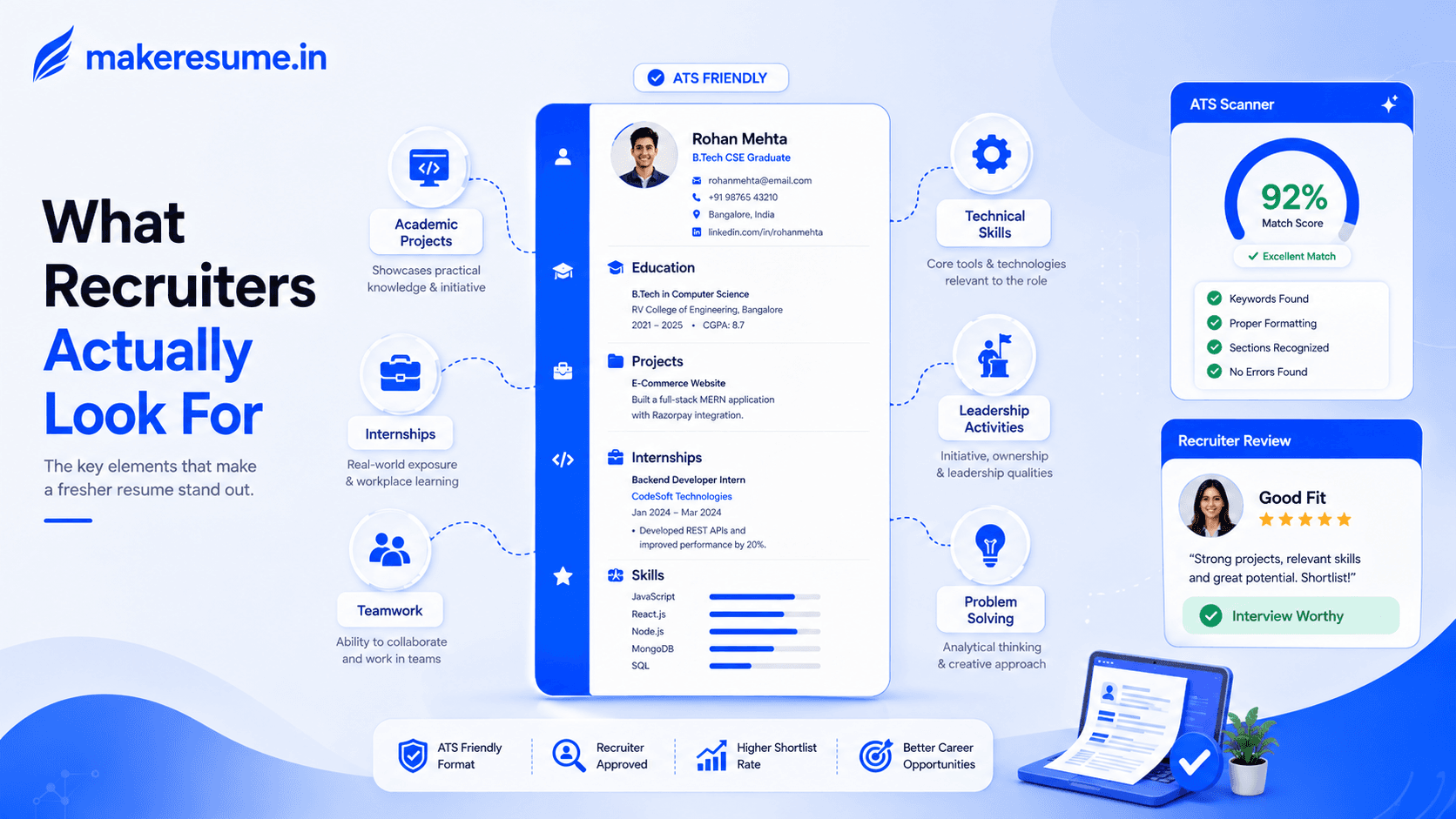
So instead of leaning on job history, yours needs to lean on:
- Academic projects that show initiative
- Internships, even short ones
- Extracurriculars that reveal leadership or teamwork
- Skills you've actually practiced, not just studied
Once you stop trying to imitate a senior professional's resume and start building something suited to where you actually are, the whole process gets a lot less intimidating.
The Anatomy of a Strong Fresher Resume
Think of your resume like a short film. It needs a clear opening, a strong middle, and an ending that leaves an impression. Here's the structure that tends to work best.
1. Contact Information and a Sharp Summary
Keep this simple: your name, phone number, email, city, and LinkedIn if you have one. Below that, add a two- or three-line summary. This isn't the place for vague lines like "hardworking and passionate individual seeking opportunities." Recruiters have read that sentence a thousand times, and it tells them nothing.
Instead, try something like: "Computer Science graduate with hands-on experience building two full-stack web applications and a 3-month internship in backend development, looking to contribute to a fast-paced engineering team."
See the difference? One is filler. The other actually says something.
2. Education: Keep It Brief
Yes, your degree matters, but it shouldn't dominate the page. List your degree, institution, graduation year, and CGPA if it's strong. That's usually enough. Save the real estate for the sections that let you show, not just tell.
3. Projects: The Real Heart of Your Resume
This is where most freshers undersell themselves. If you built something (a mobile app, a data dashboard, a marketing campaign for a college fest), write it like it mattered, because it did.
Don't just say "Built a food ordering app." Say what it did, what tools you used, and what the outcome was, even roughly. Numbers make a huge difference here, even estimated ones.
4. Internships and Work Experience
Even a two-week internship counts. Talk about the actual work you did rather than repeating your job title. Did you assist with research? Handle client communication? Debug code? Spell it out.
5. Skills Section
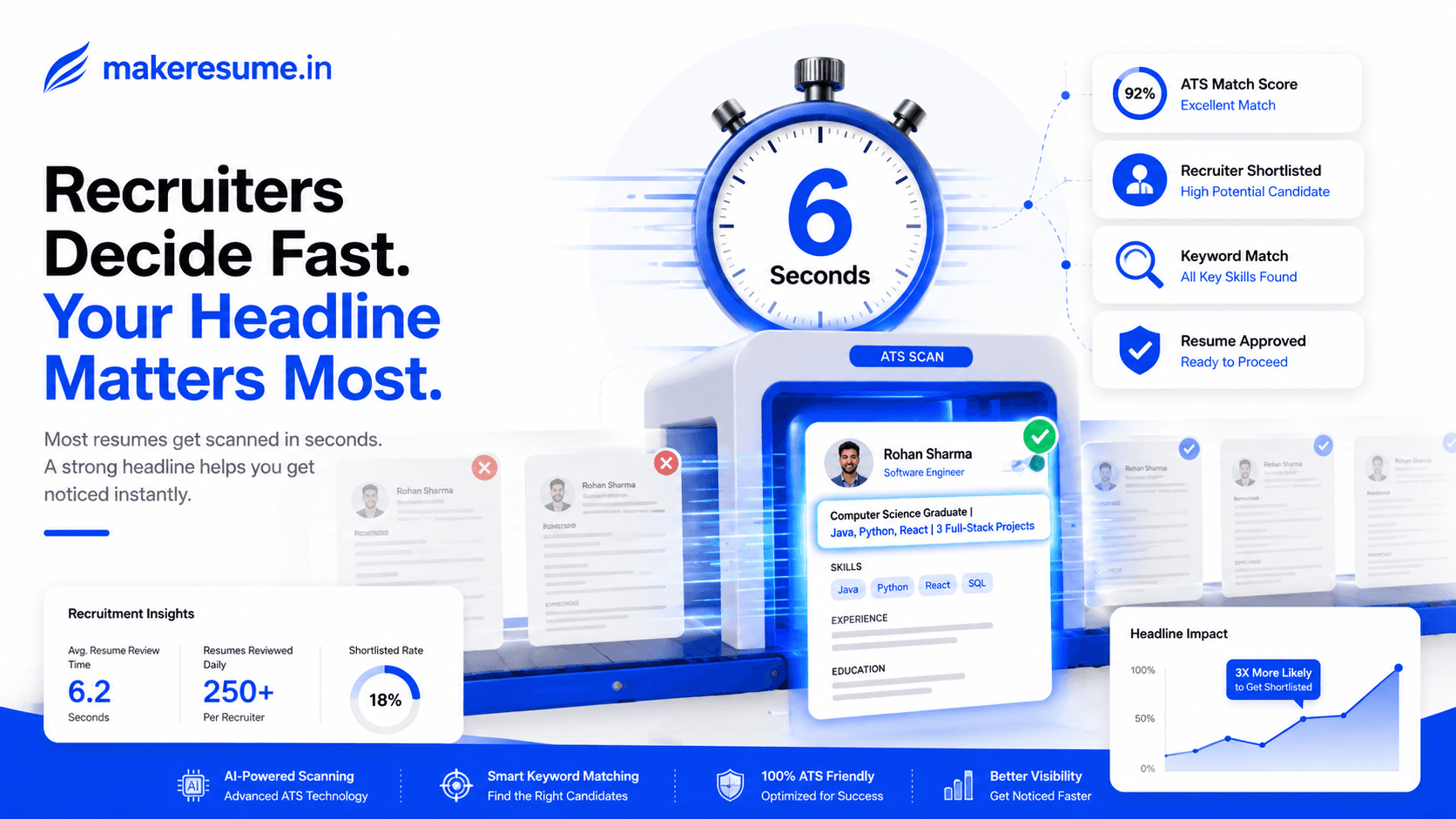
List technical skills honestly: tools, languages, software, rather than vague soft skills like "good communicator." Recruiters (and the ATS software scanning your resume before a human sees it) respond to specific, verifiable skills.
Mistakes That Quietly Sink an Otherwise Good Resume
Let's talk about the landmines. Most freshers don't fail because they lack potential. They fail because of small, fixable mistakes in their resume for freshers.
- Writing a two-page resume. Unless you have an unusually packed background, one page is plenty for a fresher-level role.
- Using a generic objective statement. "Seeking a challenging position to utilize my skills" says nothing about you specifically.
- Copy-pasting the same resume for every job. One that isn't tailored to the role often gets filtered out before a human even opens it.
- Ignoring formatting. Fancy templates with multiple columns can actually confuse ATS software, causing your information to get scrambled or dropped entirely.
- Undervaluing college experience. A hackathon win, a student club leadership role, or a research paper is worth mentioning; don't leave it out just because it wasn't a "real job."
Would you rather submit a resume that blends in with a thousand others, or one that actually sounds like you? The second one takes a bit more effort, but it's the one that gets remembered.
How to Tailor Your Fresher Resume to Each Job
Here's a small habit that makes a big difference. Before you apply, read the job description carefully and note the exact words used for skills and tools. Then, where it's genuinely true, mirror that language in your resume.
If a listing says "proficient in Excel and data visualization," and you've done that in a college project, say so using those same words. This isn't about lying or stuffing keywords. It's about speaking the same language as both the recruiter and the software scanning your resume for a match.
A resume tailored this way, even slightly, tends to perform far better than one blasted out unchanged to fifty companies.
Formatting Tips That Make a Real Difference
Think of formatting as the outfit your content wears to the interview. Even great content can get overlooked if the presentation feels cluttered or hard to follow.
- Stick to a single-column layout for better ATS compatibility
- Use clear, standard headings: Education, Skills, Projects, Experience
- Choose a clean font like Calibri or Arial, sized 10–12pt
- Keep your resume to one page
- Save and submit as a PDF unless told otherwise
A resume that follows these basics might not win a design award, but it will actually get read, by both software and humans.
Frequently Asked Questions
Q: How long should a resume for freshers be?
One page is ideal for a fresher resume. Recruiters reviewing large volumes of applications rarely read past the first page anyway.
Q: What if I have no internship experience at all?
Lead with academic projects, coursework, extracurriculars, and any freelance or volunteer work. Focus on what you did and what it involved.
Q: Should I include a photo on my resume?
In most cases, no. It's unnecessary and can sometimes cause ATS parsing issues. Check the norms for your specific industry and country.
Q: Is it okay to use a resume template?
Yes, as long as it's ATS-friendly. Avoid heavy graphics, tables, or multi-column designs for your core content.
Conclusion
Writing a resume for freshers isn't about pretending you have more experience than you do. It's about presenting what you genuinely have in the clearest, most compelling way possible. Focus on real projects, honest skills, and a structure that's easy for both recruiters and ATS software to read. Take the time to tailor it, keep it clean, and let your actual effort show through. Your first resume for freshers won't be perfect, but it just needs to be good enough to get you in the room. The rest is up to you.
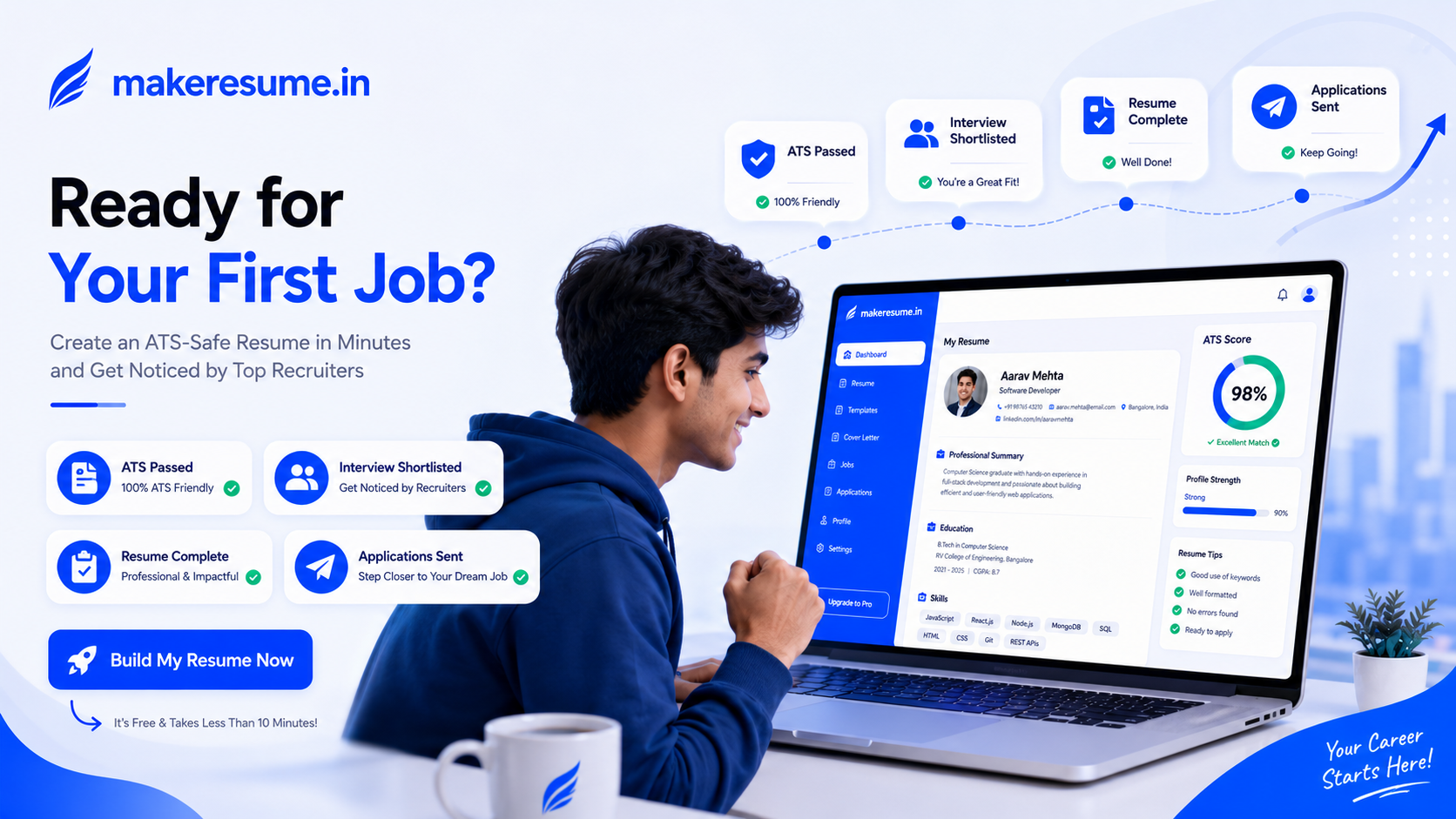
Ready to put this into practice? Build your resume for freshers for free with MakeResume. Apply now and get an ATS-safe resume ready in minutes.